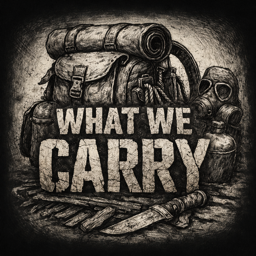
We’re building What We Carry as a survival narrative game for iPhone and iPad.
The premise is simple on purpose: a family has to survive after the old routines stop working. You choose a scenario, gather companions, grab emergency supplies, pick shelter, and then make day-by-day decisions under pressure.
The interesting part is what those decisions cost.
Food, water, safety, morale, exhaustion, time, and trust all pull in different directions. A good choice in one clock can hurt another. A smart plan can still leave someone scared, injured, hungry, or carrying the memory of what happened.
That is the space we want the game to live in.
The shape of a run
Each run starts before the survival loop is fully underway. You build the family, make choices about skills and supplies, and decide what kind of shelter gives you the best chance.
Then the days begin.
You scavenge, rest, craft, use items, send companions on tasks, respond to events, and decide when a risk is worth taking. The game tracks more than whether the party is technically alive. It tracks progress, relationships, memories, events, goals, and the long-term effect of choices that seemed small at the time.
The goal is not to turn survival into arithmetic. The goal is to make every number feel attached to a person.
Built around family stakes
What We Carry is not just about inventory pressure. It is about the people under that pressure.
Companions have age, traits, skills, needs, memories, and bonds. They can help, struggle, change, and leave a mark on the run. A child, an elder, and an adult should not feel like interchangeable stat blocks. They should change the way you read each decision.
That has shaped the systems we are building:
- family setup and companion roles
- scenario-specific survival arcs
- clocks for core pressure like hunger, thirst, morale, and danger
- events with requirements, risks, and delayed consequences
- crafting, scavenging, trade, and shelter decisions
- mini-games that support survival actions without becoming the whole point
- achievements that recognize both progress and the stories created along the way
The emotional premise matters here. This is not disaster as spectacle. It is survival written through everyday objects, improvised plans, remembered rooms, and the question of what a family can carry when there is too much to carry everything.
A free start, then one unlock
The first scenario, Bunker Lockdown, is free to play.
After that, What We Carry uses one optional Full Game unlock. The unlock opens the complete scenario path, scenario skip support, and Endless Mode. There are no ads, subscriptions, loot boxes, consumables, revives, rerolls, resource boosts, or pay-to-win shortcuts.
That structure fits the game better than trying to interrupt it with monetization loops. The player should be thinking about the family, the clocks, and the next hard choice, not about an economy outside the story.
Why iPhone and iPad
What We Carry is being built as a portrait-first iOS game because the loop works well in short but meaningful sessions.
A run can be played one decision at a time. The interface needs to make dense survival state readable on a phone, while still giving iPad players more room to scan the party, inventory, goals, and current pressure.
The app stores progress locally on the device, supports Game Center achievements, and is being prepared for App Store release with iPhone and iPad screenshot sets, a completed Full Game purchase flow, and the required policy pages.
What comes next
The current release path is focused on getting version 1.0 ready cleanly: the App Store listing, screenshots, Game Center achievement subset, Full Game unlock, and final policy/support surfaces.
After that, we will keep tuning the parts that make the game matter: scenario pacing, event variety, companion memory, balance, readability, and the places where a survival system becomes a story because the player has to choose.
If Sideline Strategist is about the long arc of running a franchise, What We Carry is about the smaller, sharper arc of keeping people alive through one more day.